The Archaeological Documentation Workflow
▶ The Archaeological Documentation Workflow (~~7 min)
Prerequisites
From 3D Models to Knowledge: Proxies and the Knowledge Graph
Overview
The full pipeline from excavation to digital reconstruction: field documentation, post-excavation processing, and virtual reconstruction using EM proxies. The hidden cost of post-excavation is addressed, including commercial archaeology contexts and the use of AI-assisted visualisation tools.

Full workflow: excavation → field docs → office processing → EM archive.
Key Concepts
Post-excavation is the most time-consuming (and often under-budgeted) phase.
EM provides a structured pipeline: raw data → proxy → virtual reconstruction.
Commercial archaeology use cases drive EM’s scalability requirements.
AI tools (e.g., image generation from proxy volumes) are an experimental extension.
Screenshots

Post-excavation as the ‘hidden cost’ in archaeological projects.
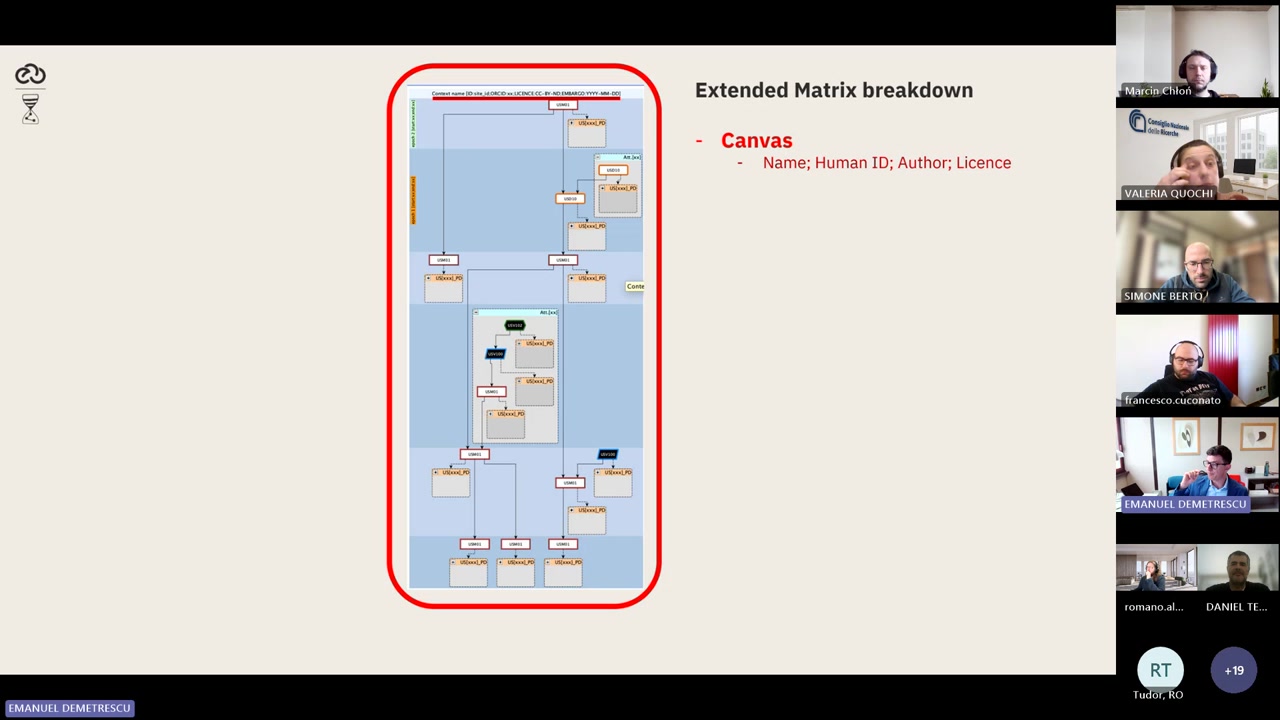
EM reconstruction pipeline: proxy volume → virtual anastylosis.
Try It Yourself
Sketch the documentation workflow for a hypothetical excavation using the four EM phases.
Note
A video walkthrough for this tutorial will be available on the Extended Matrix YouTube channel.
See also
Multi-Temporal 3D Visualization Demo